

If you’re dealing with aches whether from a hard workout, a silly spasm, or just age catching up you’ve likely heard about heat therapy and cold therapy for pain relief. These approaches show up everywhere: at home, in physio sessions, on the sports field, and in rehab clinics. What makes a big difference is using the right one at the right moment knowing when to apply heat versus cold can help accelerate recovery and relieve discomfort — but used incorrectly, it can also make symptoms worse. In this article you’ll learn how each method works, when it’s appropriate, how to apply them safely, and what the deciding factors are so you can pick what’s best for you.
What are Heat and Cold Therapies?
Heat therapy = raising tissue temperature locally or regionally to help ease pain, increase circulation and loosen tissues.
Cold therapy = lowering tissue temperature through cold modalities to reduce inflammation, slow metabolism, and numb pain.
On a tissue‑level: heat causes vasodilation (blood vessels widen) → increased blood flow, increased tissue metabolism; cold causes vasoconstriction (blood vessels narrow) → decreased blood flow, reduced metabolic demand, reduced nerve conduction.
How Heat Therapy Works
Vasodilation: applying heat widens blood vessels, so more oxygen, nutrients and warmth reach the injured or sore area.
Muscle relaxation & flexibility: heat elps reduce muscle stiffness, decreases muscle guard (i.e., protective muscle tension) and may improve extendable connective tissue.
Nerve modulation & metabolism: by increasing tissue temperature you can affect nerve conduction (slowing pain signals) and increase metabolic rate in the local tissue, which may aid repair.
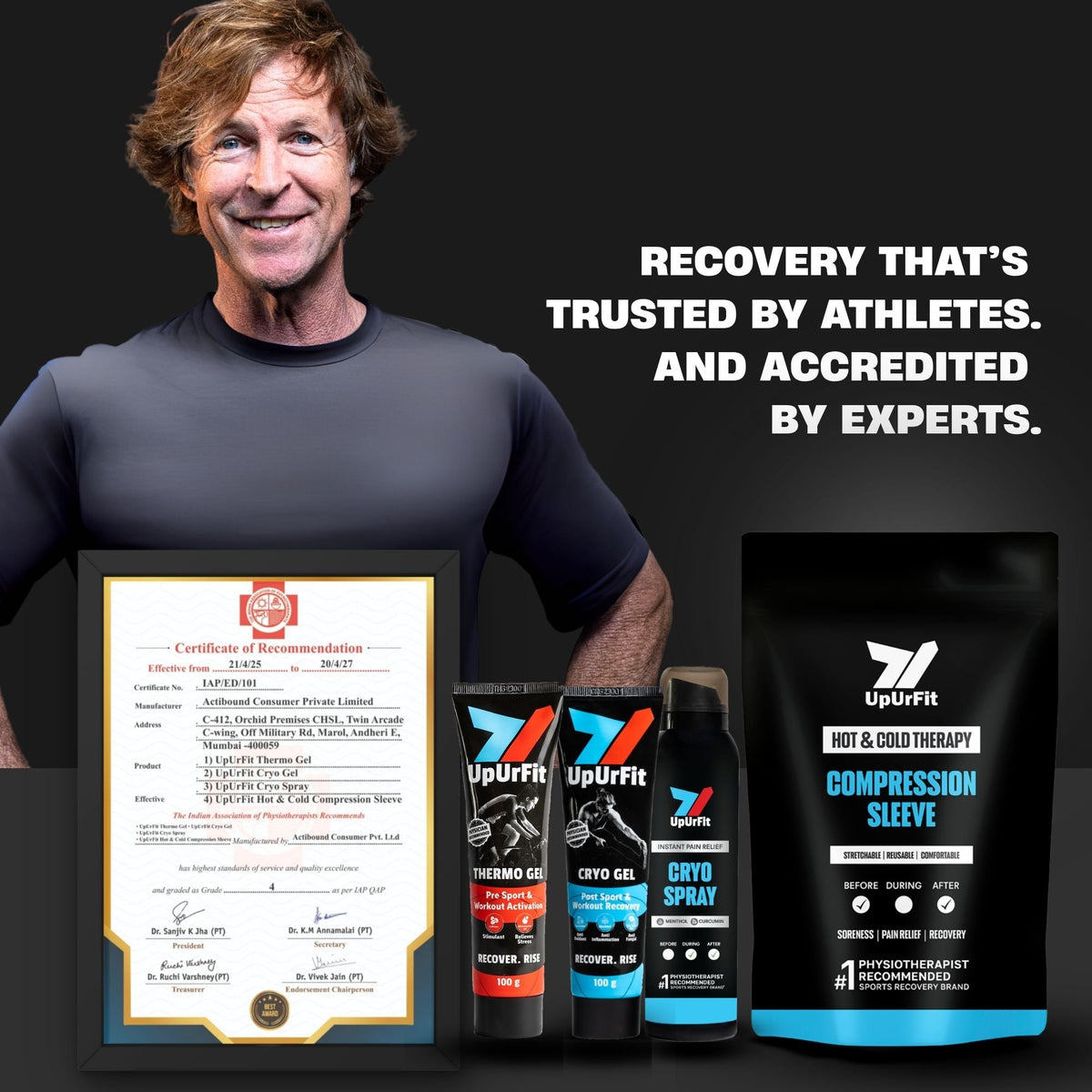
"For targeted heat therapy at home or on the go, try UpUrFit's Thermo Gel a pre-workout warming gel designed for muscle activation and stiffness relief."
How Cold Therapy Works
Vasoconstriction: cooling causes blood vessels to narrow, reducing blood flow, which helps limit swelling, inflammation, and bruising.
Nerve activity & muscle response: by lowering tissue temperature, cryotherapy slows nerve conduction and reduces nerve excitability, which can help ease pain and decrease muscle spasm.
Metabolic effects: reduced temperature also lowers local metabolic rate, helping to limit tissue damage and support recovery
Typical uses: acute injuries (sprains, strains, fresh impact), immediate post‑injury phase when inflammation and swelling are prominent.
Timing: When to Use Cold vs Heat
Cold therapy: best within the first 24‑48 hours of an injury or flare‑up, when swelling and inflammation dominate.
Heat therapy: better when you’re dealing with chronic pain, muscle stiffness, or after initial swelling has gone down. For example, heat is used for back pain or arthritis.
Contrast Therapy (alternating may help) : when the goal is recovery from overuse or muscle soreness rather than just one‑time injury. The idea: switching between vasoconstriction and vasodilation to stimulate circulation.
Specific Conditions and Examples
Acute soft‑tissue injuries (sprain, strain): cold therapy is usually more appropriate early on.
Chronic musculoskeletal pain (arthritis pain, chronic back pain): heat therapy often provides better relief of muscle stiffness and ongoing discomfort.
Sports recovery (exercise‑induced pain, delayed‑onset muscle soreness): Both modalities have roles for DOMS. Cold therapy within 24h can reduce discomfort; heat may help later to relax muscles.
How to Apply Heat Therapy Safely
Types of heat: Moist heat: warm towels, baths, thermo gel packs
Dry heat: Heating pads and wraps ease stiffness and tension.
Deep heat: ultrasound or diathermy – used in clinics for deeper tissues.
Duration guidelines: typically around 10‑20 minutes per application for localised treatment; avoid overheating, applying packs directly on skin without a barrier can lead to burns.
Precautions: Do not use heat if you have an open wound, active inflammation, poor circulation (e.g., vascular disease), impaired sensation or certain medical conditions. Skin health matters.
How to Apply Cold Therapy Safely
Types of cold therapy: Ice packs/compresses, Cryo gel, Ice massage, Cold baths, Cryo chambers
Duration: standard is about 10‑15 minutes, rarely more than 20 minutes at a time for local treatment to avoid tissue damage or nerve effects.
Precautions: Do not apply ice directly on skin without a barrier; avoid cold therapy if you have impaired sensation, circulatory disease (e.g., Raynaud’s), open wounds or compromised skin.
Risks, Contraindications and When to See a Professional
What can go wrong: Using heat too early (while swelling is present) may worsen the swelling; using cold too long may impair circulation, slow tissue repair, or cause frost‑injury.
Conditions requiring caution: diabetes, circulatory disease, nerve damage, very thin or very sensitive skin, open wounds or infections.
When therapy isn’t helping: If there’s no improvement in pain, swelling or mobility after a few days, or if symptoms worsen (numbness, skin colour change, increased discomfort) then see a healthcare practitioner.
Contrast Therapy and Combined Approaches
Definition: Alternating heat and cold therapy (for example, a few minutes of warm compress followed by cold compress, repeated in cycles).
Mechanism: By shifting between vasodilation and vasoconstriction you may enhance circulation, remove metabolic waste, ease muscle tension and stimulate recovery.
Practical tips: For example, 3‑4 minutes heat followed by 1 minute cold, repeat for 20‑30 minutes; best suited for muscle soreness, overuse rather than fresh injury.
Always start with cold if swelling is present, then after swelling reduces, you may alternate.
Monitor skin reaction, stop if uncomfortable or changes in skin happen.
Practical Tips for Everyday Use (Home & Sports)
Home protocol for heat: Use a heating pad or warm bath, apply to stiff muscles or joints for ~15 minutes, then move gently. A hot water bottle wrapped in a towel works fine.
Home protocol for cold: Use an ice pack wrapped in cloth, apply to a bruised area or swelling for ~10‑15 minutes, rest, then repeat.
For athletes/fitness: After intense workout you may choose cold therapy if you feel swelling or severe soreness; if you feel muscle stiffness or residual tightness, use heat before workout or as recovery.
Monitor skin and sensation: barrier between modality and skin, check every few minutes, stop if skin turns very red, white or numb.
Do not leave modality on while sleeping unless advised by a practitioner; time‑limited use is safer.
General guidance: for acute injuries, cold is often the go‑to; for muscle stiffness, chronic pain, heat may offer better results.
Myth‑Busting Common Misconceptions
“Ice is always better” Not true. Ice is great for acute inflammation but may not be ideal for chronic muscle pain or stiffness. Using it in the wrong phase may delay recovery.
“Heat should never be used in injuries” Not always true. Heat can help after initial swelling reduces, especially for chronic conditions, muscle stiffness or joint pain.
One size fits all doesn’t apply factors like the type of injury (soft tissue vs joint), duration (acute vs subacute vs chronic), patient health (circulation, sensation) all matter.
FAQs
When should I stop using ice or heat and see a doctor?
If you’ve applied ice or heat as directed for several days and the pain, swelling or stiffness hasn’t improved, or if you develop new symptoms like numbness, skin colour changes, increased redness, warmth or your motion gets worse, it’s time to seek practitioner advice. Also if you have an underlying condition (e.g., circulatory disease, diabetes) that may affect safe use.
Can I use heat immediately after an injury?
Usually not in the first 24‑48 hours of an acute injury (when swelling and inflammation are dominant) cold therapy is recommended because heat may increase blood flow and worsen swelling. Once the acute phase passes, applying heat may be appropriate.
Is it okay to alternate between heat and cold?
Yes, in certain situations alternating (contrast therapy) can help. Especially for muscle soreness, overuse injuries or when you want to enhance circulation after swelling has reduced. But the timing, your specific condition and skin/health factors need to be taken into account.
Conclusion
Reinforce that heat and cold therapies are inexpensive, accessible and effective options for pain relief when used at the right time and in the right way.
Emphasize choosing the method that best matches your injury type, symptoms, and overall health, and use it in your recovery or pain-management routine with awareness and confidence.
Remind about safety: correct modality, correct duration, skin check, and when to stop and seek professional help.